
[Paper Review] Tutorial on Diffusion Models for Imaging and Vision
This tutorial provides a comprehensive, mathematically grounded introduction to diffusion models for imaging and vision, covering variational autoencoders (VAE), denoising diffusion probabilistic models (DDPM), score-based models (SMLD), and stochastic differential equations (SDE). It explains how iterative denoising from noise to data generation works across multiple theoretical frameworks, unifying them under a common probabilistic and differential equation perspective, and highlights their application to inverse problems in imaging.
The astonishing growth of generative tools in recent years has empowered many exciting applications in text-to-image generation and text-to-video generation. The underlying principle behind these generative tools is the concept of diffusion, a particular sampling mechanism that has overcome some shortcomings that were deemed difficult in the previous approaches. The goal of this tutorial is to discuss the essential ideas underlying the diffusion models. The target audience of this tutorial includes undergraduate and graduate students who are interested in doing research on diffusion models or applying these models to solve other problems.
Motivation & Objective
- To provide a unified, accessible, and mathematically rigorous foundation for understanding diffusion models in imaging and vision for graduate and advanced undergraduate researchers.
- To clarify the conceptual and mathematical connections between key diffusion model variants—VAE, DDPM, SMLD, and SDE—by tracing their derivations from first principles.
- To demonstrate how diffusion models can be applied to inverse problems in imaging, such as image restoration, by replacing traditional denoisers with diffusion samplers.
- To highlight the theoretical advantages of diffusion models, particularly their use of small, incremental denoising steps that overcome limitations of earlier generative models like GANs and VAEs.
- To position the SDE framework as a unifying lens for understanding, comparing, and improving diffusion sampling schemes through established tools from stochastic calculus and probabilistic modeling.
Proposed method
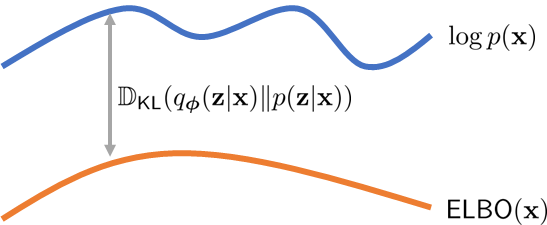
- Derives the variational autoencoder (VAE) framework using the evidence lower bound (ELBO), showing how to train an encoder-decoder pair to approximate the true data distribution via latent variable modeling.
- Introduces the Denoising Diffusion Probabilistic Model (DDPM) by modeling a forward diffusion process that gradually adds Gaussian noise to data and a reverse process that denoises step-by-step using learned denoising networks.
- Uses the SDE formulation to unify DDPM and SMLD, showing that both can be described as solutions to the same class of stochastic differential equations, enabling a common theoretical and algorithmic framework.
- Applies the variation of constants theorem to solve the reverse SDE analytically, enabling exact or numerically integrated sampling from the learned data distribution.
- Reframes the reverse diffusion process as a stochastic differential equation with drift and diffusion terms, where the drift is derived from the score function of the data distribution.
- Demonstrates that the reverse SDE can be solved via numerical integration, with the option to use predictor-corrector schemes for improved sampling efficiency and accuracy.

Experimental results
Research questions
- RQ1How do variational autoencoders (VAE) provide a probabilistic framework for learning latent representations and generating data?
- RQ2What is the mathematical mechanism behind the DDPM reverse process, and how does it enable data generation through iterative denoising?
- RQ3How can score-based generative models (SMLD) be derived from the score matching principle and linked to the SDE framework?
- RQ4In what way does the SDE formulation unify different diffusion model approaches, and what advantages does this unification offer for analysis and algorithm design?
- RQ5How can diffusion models be adapted to solve inverse problems in imaging, such as image denoising or super-resolution, by replacing traditional denoisers with diffusion samplers?
Key findings
- The SDE framework provides a unifying mathematical language for diffusion models, showing that DDPM and SMLD are special cases of the same class of stochastic processes.
- The reverse SDE can be solved exactly using the variation of constants formula, enabling theoretical analysis and numerical integration for sampling.
- The reverse process in DDPM is equivalent to a score-based SDE with drift derived from the data score function, linking diffusion models to score-based generative modeling.
- The use of small, incremental denoising steps in diffusion models enables stable and high-quality generation, overcoming training instabilities seen in GANs and VAEs.
- Diffusion models can be directly applied to inverse problems by replacing the denoiser in plug-and-play algorithms with a diffusion sampler, leading to improved image restoration results.
- Theoretical analysis via SDEs allows for the application of tools from stochastic calculus and Fokker-Planck equations to study the limiting behavior and convergence of diffusion sampling algorithms.
Read this paper
Open the full text in the Nubint reader and ask about any passage as you read.
Read this paper on NubintThis review was generated by AI from the original paper. Please check the paper before citing it.