
[Paper Review] DuDoNet: Dual Domain Network for CT Metal Artifact Reduction
DuDoNet is an end-to-end, dual-domain deep learning framework that simultaneously enhances CT images and restores sinograms to reduce metal artifacts from implants. By introducing a differentiable Radon inversion layer (RIL) and a Radon consistency loss, it enables gradient back-propagation from the image to sinogram domain, significantly reducing secondary artifacts and outperforming single-domain methods in artifact suppression and detail recovery.
Computed tomography (CT) is an imaging modality widely used for medical diagnosis and treatment. CT images are often corrupted by undesirable artifacts when metallic implants are carried by patients, which creates the problem of metal artifact reduction (MAR). Existing methods for reducing the artifacts due to metallic implants are inadequate for two main reasons. First, metal artifacts are structured and non-local so that simple image domain enhancement approaches would not suffice. Second, the MAR approaches which attempt to reduce metal artifacts in the X-ray projection (sinogram) domain inevitably lead to severe secondary artifact due to sinogram inconsistency. To overcome these difficulties, we propose an end-to-end trainable Dual Domain Network (DuDoNet) to simultaneously restore sinogram consistency and enhance CT images. The linkage between the sigogram and image domains is a novel Radon inversion layer that allows the gradients to back-propagate from the image domain to the sinogram domain during training. Extensive experiments show that our method achieves significant improvements over other single domain MAR approaches. To the best of our knowledge, it is the first end-to-end dual-domain network for MAR.
Motivation & Objective
- To address the limitations of single-domain approaches in reducing structured, non-local metal artifacts in CT images.
- To overcome the issue of secondary artifacts caused by sinogram inconsistency in traditional sinogram-domain correction methods.
- To enable joint optimization of image and sinogram restoration through end-to-end training with gradient flow across domains.
- To improve performance on small metallic implants by preserving multi-scale mask information in the sinogram refinement network.
- To develop a generalizable, practical framework that requires only implant-free sinograms, CT images, and metal masks for training, without needing paired metal-free scans.
Proposed method
- The network consists of three components: a sinogram enhancement network (SE-Net), a Radon inversion layer (RIL), and an image enhancement network (IE-Net).
- SE-Net employs a mask pyramid U-Net architecture to preserve fine-grained metal mask information across multiple scales, improving performance on small implants.
- The RIL enables differentiable filtered back-projection, allowing gradients to flow from the image domain back to the sinogram domain during training.
- A Radon consistency (RC) loss is introduced to penalize secondary artifacts by leveraging image-domain supervision and back-propagating gradients through RIL.
- IE-Net performs residual learning to refine the final CT image, enhancing structural details and reducing residual artifacts.
- The framework is trained end-to-end using only implant-free sinograms, corresponding CT images, and metal trace masks, avoiding the need for paired metal-free scans.
Experimental results
Research questions
- RQ1Can joint optimization in both sinogram and image domains lead to superior metal artifact reduction compared to single-domain methods?
- RQ2How can gradient flow be effectively established from the image domain back to the sinogram domain to enforce physical consistency?
- RQ3Can a multi-scale mask pyramid architecture improve sinogram refinement, especially for small metallic implants?
- RQ4To what extent does a differentiable Radon inversion layer enable end-to-end training of dual-domain networks for CT reconstruction?
- RQ5Can a Radon consistency loss effectively suppress secondary artifacts without requiring ground-truth sinograms?
Key findings
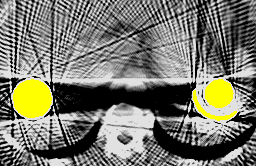
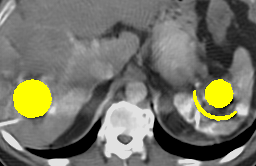
- DuDoNet achieves state-of-the-art performance in reducing metal artifacts on real patient CT scans, significantly outperforming single-domain methods like CNNMAR and cGAN-CT.
- The method effectively reduces streaking and shadowing artifacts while preserving fine anatomical details, as demonstrated in visual comparisons on real data.
- The use of a mask pyramid U-Net in SE-Net improves performance on small metallic implants, where traditional networks tend to lose critical structural information.
- The Radon consistency loss successfully penalizes secondary artifacts by leveraging image-domain supervision and back-propagating gradients through the RIL.
- DuDoNet does not require paired metal-free scans for training, relying only on implant-free sinograms, CT images, and metal masks, which enhances practical applicability.
- Extensive evaluations on hundreds of patient scans confirm that the dual-domain approach leads to more consistent and diagnostically reliable CT images than existing methods.
Read this paper
Open the full text in the Nubint reader and ask about any passage as you read.
Read this paper on NubintThis review was generated by AI from the original paper. Please check the paper before citing it.