
[論文レビュー] Adaptive Gains to Super-Twisting Technique for Sliding Mode Design
本稿では、摂動の大きさを3次スライディングモード観測器を用いて正確に推定することで、低 pass フィルタを用いないまま、chattering を低減するとともに制御ゲインを削減する、2次スライディングモード制御のための適応型スーパー・ツイストアルゴリズム(STA)を提案する。この手法により、有限時間収束とロバスト性を確保しつつ、調整パrameterを1つに限定したオンラインでの両STAゲインの適応が可能になる。数値シミュレーションにより、摂動を受けるLTI系上で有効性が検証された。
This paper studies the super-twisting algorithm (STA) for adaptive sliding mode design. The proposed method tunes the two gains of STA on line simultaneously such that a second order sliding mode can take place with small rectifying gains. The perturbation magnitude is obtained exactly by employing a third-order sliding mode observer in opposition to the conventional approximations by using a first order low pass filter. While driving the sliding variable to the sliding mode surface, one gain of the STA automatically converges to an adjacent area of the perturbation magnitude in finite time. The other gain is adjusted by the above gain to guarantee the robustness of the STA. This method requires only one parameter to be adjusted. The adjustment is straightforward because it just keeps increasing until it fulfills the convergence constraints. For large values of the parameter, chattering in the update law of the two gains is avoided by employing a geometry based backward Euler integration method. The usefulness is illustrated by an example of designing an equivalent control based sliding mode control (ECBC-SMC) with the proposed adaptive STA for a perturbed LTI system.
研究の動機と目的
- 従来のスーパー・ツイストアルゴリズムにおけるchatteringと高すぎる制御ゲインの問題を解決すること。
- 適応的ゲイン調整における等価制御の近似に低 pass フィルタに依存しないこと。
- 正確な摂動推定を用いて、両スーパー・ツイストゲインのオンラインでロバストに適応可能にすること。
- 最小限の制御努力で有限時間収束とロバスト性を確保すること。
- 調整を単一の可変パラメータに簡素化すること。
提案手法
- 摂動の大きさを正確に推定するために、3次スライディングモード観測器を設計し、低 pass フィルタによる近似を置き換える。
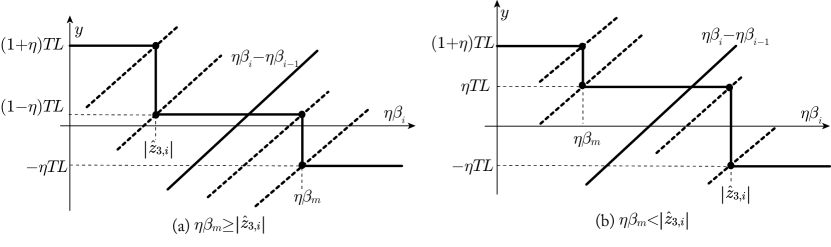
- chattering の抑制を可能にするために、微分包含として観測器のダイナミクスを定式化し、陰的Euler積分を用いる。
- ロバストネスと有限時間収束を保証するためのリャプノフに基づく法則に従い、2つの適応的ゲイン α と β をオンラインで更新する。
- ゲイン β は正確な摂動の大きさに適応され、α はロバスト性を維持するために比例的に調整される。
- 大きなゲイン値に起因するchatteringを防止するため、更新則に幾何学的バックワードEuler積分法を適用する。
- 摂動を受けるLTI系に適応型等価制御ベースのスライディングモード制御(ECB-SMC)として統合する。
実験結果
リサーチクエスチョン
- RQ1正確な摂動推定を用いることで、最小限の制御ゲインでスーパー・ツイストアルゴリズムが有限時間収束を達成できるか?
- RQ2低 pass フィルタに依存せずに、適応的ゲイン更新におけるchatteringをどのように排除できるか?
- RQ33次スライディングモード観測器の使用が、ゲイン適応の精度とロバストネスに与える影響は何か?
- RQ4適応的ゲイン機構が、制御努力を最小限に抑えつつロバスト性を確保できるか?
- RQ5低 pass フィルタに基づく従来の適応則と比較して、収束速度とゲインの大きさの観点で、本手法はどのように異なるか?
主な発見
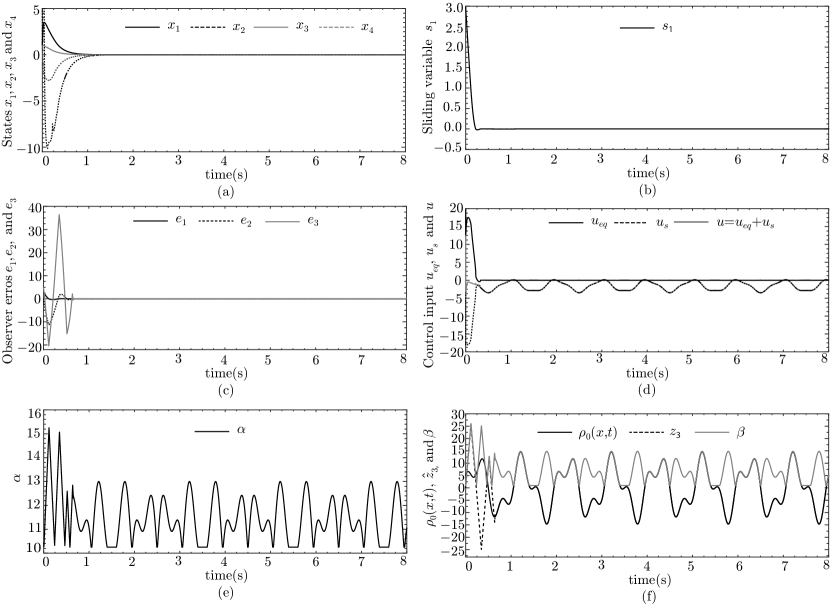
- 3次スライディングモード観測器は、摂動の大きさを正確に推定でき、スーパー・ツイストゲインの高精度な適応を可能にした。
- 適応的ゲイン更新則により、β が |ρ₀(x,t)|/η に収束し、ロバスト性を維持しつつ可能な最小限のゲインが達成された。
- 状態 x は漸近的にゼロに収束し、摂動が存在する中でもスライディング変数 s₁ は有限時間内にゼロに達する。
- 観測誤差 e は1秒未満でゼロに収束し、状態の収束よりも先に到達するため、迅速かつ独立したゲイン適応が可能になった。
- α は β に比例して調整されるため、過剰な増幅が生じず、ロバスト性が保たれた。
- 大きな L 値に対しても、更新則の幾何学的バックワードEuler積分法のおかげで、chattering が効果的に排除された。
この論文を読む
Nubintのビューアで原文を開き、読みながら気になる箇所をすぐに質問できます。
Nubintでこの論文を読むこのレビューはAIが論文の原文をもとに作成しました。引用する前に原文をご確認ください。