
[논문 리뷰] An Overview of Diffusion Models: Applications, Guided Generation, Statistical Rates and Optimization
확산 모델의 응용, 조건부 가이드 메커니즘, 이론적 특성, 최적화 프레임워크를 포괄적으로 다루는 종합적 고찰로, 무조건적 및 조건부 확산 모델과 이들의 샘플 복잡도 및 가이드 설계에 중점을 둔다.
Diffusion models, a powerful and universal generative AI technology, have achieved tremendous success in computer vision, audio, reinforcement learning, and computational biology. In these applications, diffusion models provide flexible high-dimensional data modeling, and act as a sampler for generating new samples under active guidance towards task-desired properties. Despite the significant empirical success, theory of diffusion models is very limited, potentially slowing down principled methodological innovations for further harnessing and improving diffusion models. In this paper, we review emerging applications of diffusion models, understanding their sample generation under various controls. Next, we overview the existing theories of diffusion models, covering their statistical properties and sampling capabilities. We adopt a progressive routine, beginning with unconditional diffusion models and connecting to conditional counterparts. Further, we review a new avenue in high-dimensional structured optimization through conditional diffusion models, where searching for solutions is reformulated as a conditional sampling problem and solved by diffusion models. Lastly, we discuss future directions about diffusion models. The purpose of this paper is to provide a well-rounded theoretical exposure for stimulating forward-looking theories and methods of diffusion models.
연구 동기 및 목표
- 비전, 음성, 생명과학, 강화학습(RL), 최적화 전반에 걸쳐 확산 모델의 새로운 응용을 조사한다.
- 점수 학습, 추정, 샘플링을 포함하여 무조건적 확산 모델에 대한 이론적 진보를 요약한다.
- 분포 형성에서의 가이드의 역할과 함께 조건부 확산 모델에 대한 이론적 개발을 제시한다.
- 블랙박스 최적화 및 고차원 구조 최적화와 확산 모델을 연결한다.
- 확산 모델을 확률적 제어 및 강건성에 연결하는 향후 방향을 논의한다.
제안 방법
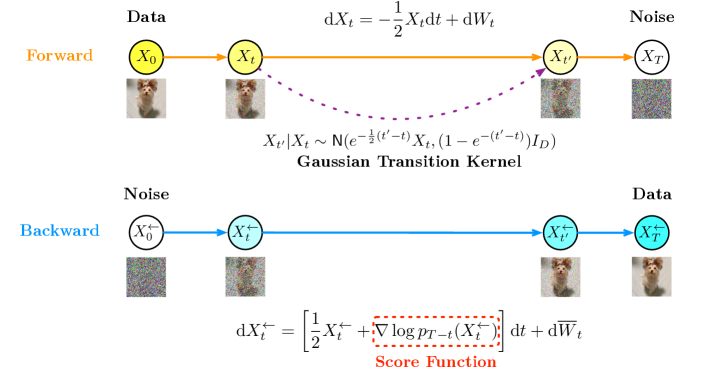
- 전방 SDE와 후방 SDE를 통한 연속시간 확산 모델 형식화와 이들의 이산화를 설명한다.
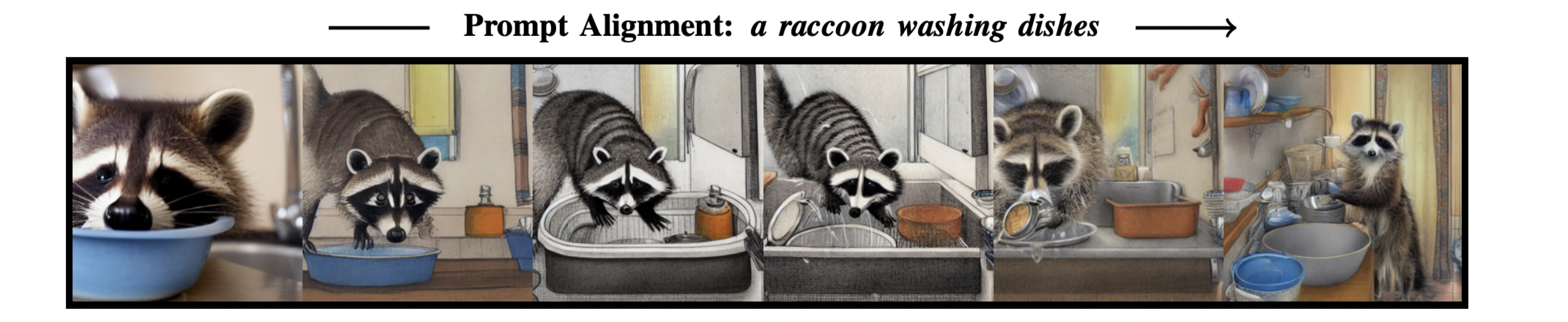
- 조건부 확산 모델이 조건부 점수를 통한 가이드 및 실용적 학습 방법으로 어떻게 가이드를 통합하는지 설명한다.
- 점수 매칭과 잡음 제거 점수 매칭을 중심 학습 목표로서 검토한다.
- 고차원 데이터에 대한 점수 근사, 추정 및 분포 학습에 대한 이론적 결과를 요약한다.
- 작업 특화 조건부 생성을 가능하게 하는 가이드의 역할(분류기/ 분류기 없음)을 논의한다.
- 확산 모델이 블랙박스 최적화 및 구조화된 해 탐색에 어떻게 사용되는지 개요를 제시한다.
실험 결과
연구 질문
- RQ1확산 모델이 데이터 분포를 정확하고 효율적으로 학습할 수 있는가, 고차원 또는 구조화된 환경에서의 샘플 복잡도는 얼마인가?
- RQ2조건부 확산 모델이 가이드에 맞춘 분포를 어떻게 생성할 수 있으며, 가이드는 어떻게 설계하고 평가되어야 하는가?
- RQ3확산 모델에서 점수 함수 학습 및 샘플링/분포 추정에 대한 이론적 보장은 무엇인가?
- RQ4확산 모델을 고차원 최적화 및 블랙박스 보상 가이드 작업에 어떻게 활용할 수 있는가?
- RQ5확산 모델과 확률적 제어 및 강건한 최적화 등 더 넓은 영역 간의 연결 고리는 무엇인가?
주요 결과
- 이 논문은 무조건적 및 조건부 확산 모델을 모두 다루면서 전방/후방 과정의 형식화와 실용적인 점수 추정 방법을 개괄한다.
- 점수 매칭과 잡음 제거 점수 매칭을 중심 학습 목표로 강조하며, 점수 폭발과 조기 중단과 같은 문제를 포함한다.
- 다양한 네트워크 아키텍처(U-Net, transformers)와 점수 근사 및 데이터 효율성에서의 역할을 다룬다.
- 실제 시스템에서 사용되는 샘플링 가속 기법과 잠재 확산 접근법을 다룬다.
- 확산 가이드 생성과 블랙박스 최적화를 연결하고, 조건부 확산 모델이 목표 보상에 조건된 고품질 솔루션을 생성할 수 있음을 보여준다.
- 확산 모델을 확률적 제어, 강건성 및 이산 확산 변형과 연결하는 향후 방향을 식별한다.
이 논문 읽기
누빈트 뷰어에서 원문을 열고, 읽으면서 궁금한 곳을 바로 물어보세요.
누빈트에서 이 논문 읽기이 리뷰는 AI가 논문 원문을 바탕으로 만들었습니다. 인용하기 전에 원문을 확인해 주세요.