
[논문 리뷰] Parameter Setting in Quantum Approximate Optimization of Weighted Problems
이 논문은 가중치가 부여된 조합 최적화 문제, 특히 가중치가 부여된 MaxCut에 적용된 양자 근사 최적화 알고리즘(QAOA)에 대해 분석적으로 기반한 매개변수 설정 히우리스틱을 제안한다. p=1일 때 평균적으로 전역 최적 매개변수는 작고 0에 가까운 것을 증명하였으며, p≥1일 경우 간선 가중치의 2차 모멘트의 역제곱근으로 정규화된 비가중치 QAOA 매개변수를 재스케일링하면 가중치가 부여된 문제에서 거의 최적의 결과를 얻을 수 있다. 수치 실험에서 평균적으로 최적화 반복 수를 7.4배 감소시켰다.
Quantum Approximate Optimization Algorithm (QAOA) is a leading candidate algorithm for solving combinatorial optimization problems on quantum computers. However, in many cases QAOA requires computationally intensive parameter optimization. The challenge of parameter optimization is particularly acute in the case of weighted problems, for which the eigenvalues of the phase operator are non-integer and the QAOA energy landscape is not periodic. In this work, we develop parameter setting heuristics for QAOA applied to a general class of weighted problems. First, we derive optimal parameters for QAOA with depth $p=1$ applied to the weighted MaxCut problem under different assumptions on the weights. In particular, we rigorously prove the conventional wisdom that in the average case the first local optimum near zero gives globally-optimal QAOA parameters. Second, for $p\geq 1$ we prove that the QAOA energy landscape for weighted MaxCut approaches that for the unweighted case under a simple rescaling of parameters. Therefore, we can use parameters previously obtained for unweighted MaxCut for weighted problems. Finally, we prove that for $p=1$ the QAOA objective sharply concentrates around its expectation, which means that our parameter setting rules hold with high probability for a random weighted instance. We numerically validate this approach on general weighted graphs and show that on average the QAOA energy with the proposed fixed parameters is only $1.1$ percentage points away from that with optimized parameters. Third, we propose a general heuristic rescaling scheme inspired by the analytical results for weighted MaxCut and demonstrate its effectiveness using QAOA with the XY Hamming-weight-preserving mixer applied to the portfolio optimization problem. Our heuristic improves the convergence of local optimizers, reducing the number of iterations by 7.4x on average.
연구 동기 및 목표
- 비정수 고유값을 가진 가중치가 부여된 조합 최적화 문제에 대해 QAOA의 계산 비용이 높은 매개변수 최적화 문제를 해결한다.
- 크기가 큰 고리 길이가 큰 정규 그래프에서 가중치가 부여된 MaxCut에 적용된 QAOA에 대해 분석적으로 타당한 매개변수 설정 규칙을 제공한다.
- 가중치가 부여된 문제와 비가중치 문제의 QAOA 에너지 구조 간의 공식적인 연결을 수립하여 기존의 비가중치 매개변수 재사용을 가능하게 한다.
- p=1일 때 QAOA 목표 함수가 기대값 주위에 농축되어 있음을 보여주어 랜덤 가중치 인스턴스에 대해 강건성을 확보한다.
- 포트폴리오 최적화에서 XY 믹서를 사용한 일반적인 가중치가 부여된 문제에 대해 히우리스틱 재스케일링 방법을 통해 프레임워크를 확장한다.
제안 방법
- i.i.d. 지수 분포 간선 가중치와 무한대 크기 근처에서의 임의의 가중치 분포 하에서, p=1인 가중치가 부여된 MaxCut에 대해 분석적으로 최적의 QAOA 매개변수를 유도한다.
- 매개변수를 1/√𝔼[w²]로 재스케일링할 경우, 가중치가 부여된 MaxCut의 QAOA 에너지 구조가 비가중치 MaxCut의 것에 점점 수렴함을 증명하여, 기존의 비가중치 최적 매개변수를 직접 재사용할 수 있음을 보장한다.
- p=1일 때 QAOA 목표 함수가 기대값 주위에 농축되어 있음을 입증하여, 제안된 매개변수 규칙이 랜덤 가중치 인스턴스에서 높은 확률로 효과가 있음을 보여준다.
- 포트폴리오 최적화에서 비선형 믹서인 XY 믹서를 사용한 QAOA에 대해 일반적인 재스케일링 히우리스틱을 제안하며, 비용 함수의 2차 및 선형 항을 모두 고려한다.
- NLopt의 BOBYQA 최적화기로 랜덤 가중치 그래프 및 포트폴리오 인스턴스에서 수치적으로 접근을 검증하며, 적절한 재스케일링 여부에 따른 수렴 성능을 비교한다.
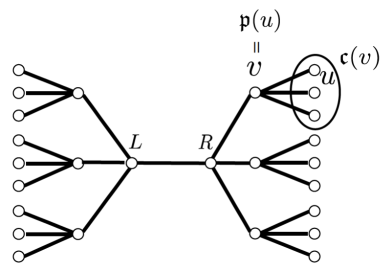
- 매개변수 스케일링 및 수렴 행동 분석을 위해 이론적 기준으로 셰링턴-키르크패트릭(SK) 모델과 그 편향된 변형을 사용한다.
실험 결과
연구 질문
- RQ1p=1일 때, i.i.d. 간선 가중치를 가진 가중치가 부여된 MaxCut에 대해 평균적으로 분석적으로 최적의 QAOA 매개변수는 무엇인가?
- RQ2매개변수 재스케일링 하에 가중치가 부여된 MaxCut의 QAOA 에너지 구조는 비가중치 MaxCut의 것과 어떻게 관련이 있는가?
- RQ3비가중치 MaxCut의 최적 매개변수는 단순한 재스케일링 규칙을 통해 가중치가 부여된 MaxCut에 적응시킬 수 있는가? 이 근사의 정확도는 어떠한가?
- RQ4랜덤 가중치 인스턴스에서 p=1일 때 QAOA 목표 함수는 기대값 주위에 농축되어 있는가? 이는 매개변수 규칙의 강건성을 보장하는가?
- RQ5비가중치 믹서가 아닌 비선형 믹서(예: 포트폴리오 최적화에서의 XY 믹서)를 사용한 QAOA에서 제안된 재스케일링 히우리스틱은 국소 최적화기의 수렴을 얼마나 효과적으로 향상시키는가?
주요 결과
- p=1일 때, 가중치가 부여된 MaxCut에 대한 QAOA의 전역 최적 매개변수는 평균적으로 작고 0에 가까운 것으로 밝혀졌으며, 널리 사용되는 히우리스틱을 엄밀히 검증하였다.
- 매개변수를 1/√𝔼[w²]로 재스케일링할 경우, 가중치가 부여된 MaxCut의 QAOA 에너지 구조는 비가중치 MaxCut의 것에 점차 수렴하며, 이로써 비가중치 최적 매개변수를 직접 재사용할 수 있다.
- p=1일 때 QAOA 목표 함수는 기대값 주위에 농축되어 있어, 제안된 매개변수 규칙이 랜덤 가중치 인스턴스 전반에서 높은 확률로 효과가 있음을 의미한다.
- 수치적 검증 결과, 제안된 고정 매개변수를 사용한 QAOA는 무작위 가중치 그래프에서 평균적으로 최적화된 에너지와 1.1퍼센트 포인트 이내의 에너지를 달성하였다.
- 히우리스틱 재스케일링 방법은 국소 최적화기의 수렴을 포트폴리오 최적화에서 평균적으로 7.4배 향상시켰다.
- 재스케일링 과정에서 선형 항(μⱼ)을 忽시할 경우 잘못된 매개변수 초기화가 발생하고 대부분의 경우 최적해를 회복하지 못함을 보여주어, 비용 함수의 모든 항을 포함하는 것이 중요함을 시사한다.

이 논문 읽기
누빈트 뷰어에서 원문을 열고, 읽으면서 궁금한 곳을 바로 물어보세요.
누빈트에서 이 논문 읽기이 리뷰는 AI가 논문 원문을 바탕으로 만들었습니다. 인용하기 전에 원문을 확인해 주세요.